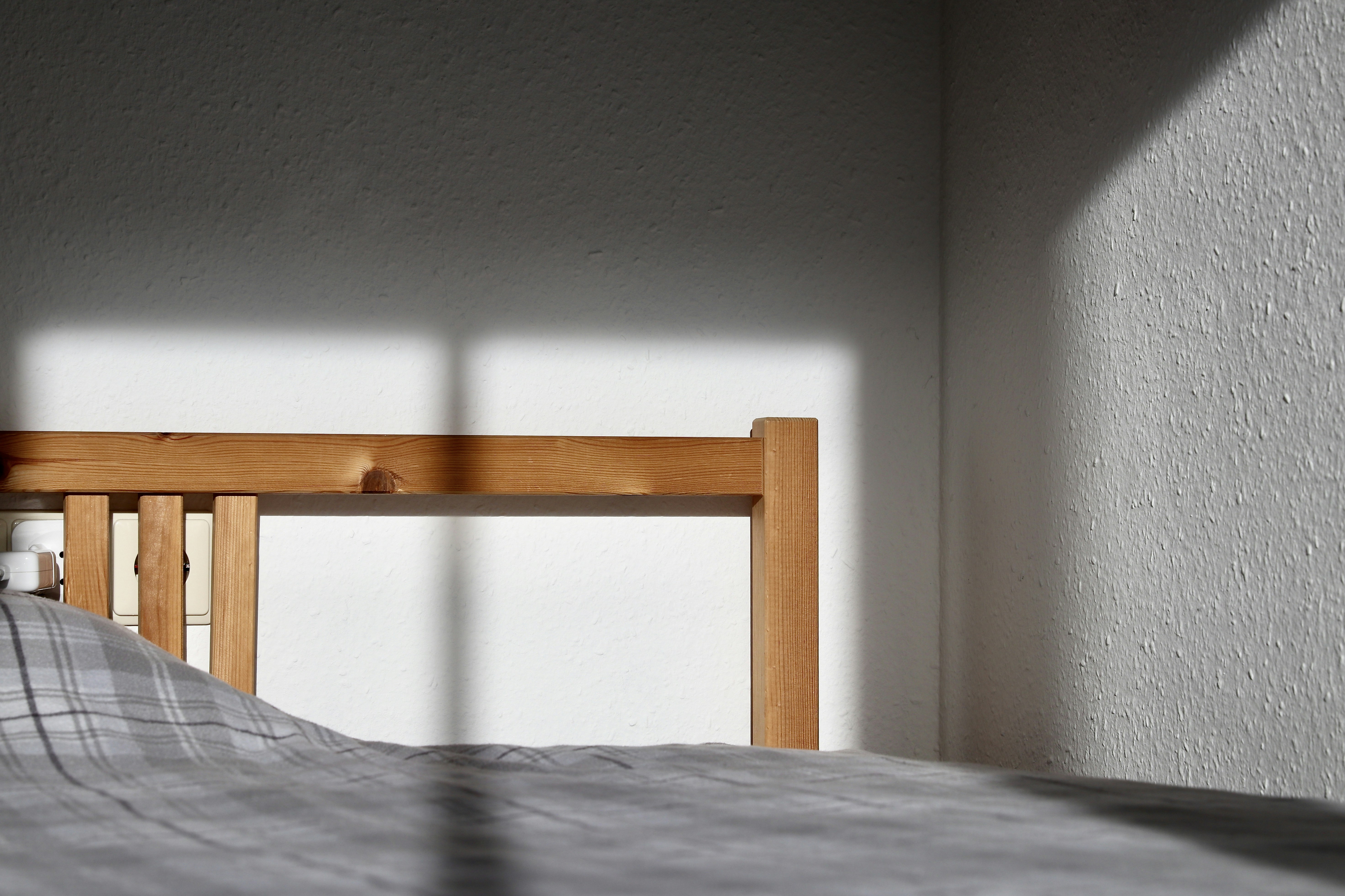
Bed frames are commonly grouped into two broad categories: upholstered and wooden. An upholstered frame has a covering of fabric, leather, or a comparable material over a padded or structured base. The visible surface may cover the headboard alone or extend across the rails and footboard. Padding can create a softer appearance and feel, although its amount and placement depend on the design. Wooden frames, by contrast, expose some or all of their wood construction. They may be made from solid timber, engineered wood, or a combination of materials, with finishes ranging from natural stains to paint or veneer.
These labels describe appearance and basic construction, but they do not provide a complete measure of quality. Upholstered frames vary in their internal structure, padding, fabric type, stitching, and joinery. Wooden models differ in timber species, board composition, hardware, finish, and assembly. A carefully built engineered-wood frame may perform well, while a poorly constructed solid-wood frame may not offer the expected strength. Similarly, a durable covering and sound frame can make an upholstered option a long-lasting choice. Comparing specific materials and construction details is therefore more useful than relying on category alone.
The practical choice depends on how a bed will be used and the conditions in the bedroom. Comfort matters, particularly for people who sit against the headboard, while appearance affects how the frame works with the room’s style. Upkeep also differs: fabric and leather may need surface cleaning or protection, whereas wood finishes can require particular care. Longevity depends on construction, wear, and maintenance, and cost ranges widely in both categories. Room conditions, including humidity, pets, children, and available space, can influence suitability. The sections that follow weigh these factors together, helping readers assess trade-offs rather than assume one type is universally better.
Upholstered bed frames bring a softer, more inviting look to a bedroom than many exposed wood designs. Their padded headboards can make routines more comfortable, for people who like to sit up in bed to read or watch television. Padding offers support behind the back and shoulders, while fabric softens the room’s visual lines. Upholstery is available in a wide range of fabrics, colors, textures, and silhouettes, including deeply tufted, sculptural designs. This variety can help coordinate a frame with existing decor or make it a focal point without relying on ornament.
Fabric coverings require more routine care than smooth wood surfaces. Dust, pet hair, and other allergens can settle into fibers, especially in seams, tufting, or textured weaves. Spills may leave marks that are difficult to remove, and scrubbing can damage delicate material or spread a stain. Depending on the covering, regular use may lead to wear, snagging, pilling, or fading from sunlight. A thickly padded frame can also appear bulky in a small bedroom and take up more physical space around the bed. These drawbacks vary by fabric and household needs, so consider pets, allergies, room size, and daily habits before choosing.
Care choices can reduce these concerns. Performance fabrics are often designed to resist stains and abrasion, while removable covers make some frames easier to clean or refresh. Stain treatments may offer added protection, though their effectiveness depends on the product and proper application. Vacuuming upholstery regularly with an appropriate attachment helps remove surface dust and hair before they become embedded. Check the manufacturer’s care instructions and test cleaning products in an inconspicuous area. Lifespan depends not only on the covering but also on fabric grade, stitching, frame materials, and internal construction. Leather and alternative coverings have distinct care requirements, so confirm maintenance and repair options when comparing models.
Wooden bed frames suit a wide range of interiors, from traditional rooms with carved details to contemporary spaces with clean, simple lines. Their visible grain gives each frame a distinct natural character, while stains and painted finishes offer further ways to coordinate with bedroom furnishings. A smooth, sealed surface is generally straightforward to clean: regular dusting and occasional wiping with a suitable soft cloth are often sufficient. Care instructions can vary by finish, so harsh cleaners and excess moisture are best avoided.
Longevity depends less on the label alone than on the quality of materials and construction. Solid wood is made from natural timber, whereas engineered wood uses processed wood layers or fibers, sometimes with a veneer or other surface covering. Neither category guarantees a better frame in every instance. The type and quality of the material, the way components are joined, and the overall frame design all matter. Secure joinery, well-supported slats, and a suitable finish can help a frame remain stable over years of regular use; checking assembly and tightening fasteners when needed also supports long service.
Wood can show wear over time. Scratches, dents, and finish loss may be more noticeable on exposed surfaces, and changes in humidity can contribute to expansion, contraction, or movement. Creaking may develop when joints loosen or slats shift, though checking connections and supports can help identify the cause. As with any frame, careful assembly and occasional maintenance reduce the likelihood of avoidable noise or instability. A wooden headboard is also generally firmer and less cushioned to lean against than an upholstered one. Reading or relaxing in bed may therefore be more comfortable with separate cushions, allowing the frame’s appearance and practical qualities to remain the priority without requiring a padded headboard.
Choose a bed frame by matching its everyday strengths to your room and habits, rather than assuming one material is best for everyone. An upholstered frame is a strong option if you want a padded headboard for reading, a softer visual effect, or a specific fabric color that anchors the bedroom. Those benefits come with care requirements: dust, spills, and marks may need prompt attention, and routine vacuuming can help keep fabric fresh.
A wooden frame may suit you better if you value visible grain and material character, prefer straightforward surface cleaning, or want a style that can change with new bedding and decor. Before buying, inspect the frame’s joinery, finish, and sturdiness; wood quality and construction vary. Consider the whole household, too. Pets may snag fabric or scratch wood, while children can increase the likelihood of spills and impacts. Allergy concerns, bedroom humidity, available floor space, and whether the bed is used for reading or lounging can also affect your choice.
Compare costs over the frame’s useful life, not just at checkout. Include the purchase price, expected lifespan, cleaning products or professional care, and likely repair needs. Upholstery may eventually wear, stain, or require replacement, while wooden components can be damaged or need refinishing. Either type can offer good value if it is well made and suited to your routine; check the warranty and whether replacement parts are available.
Before deciding, ask: Will the frame fit the room, mattress, and access route, with enough space for drawers or walking? What assembly is required, and what do the warranty terms cover? Are the support system and slat spacing compatible with your mattress? What materials, finishes, and upholstery specifications are used? What are the care instructions, and can you maintain them? Answers to these questions help translate appearance and price into a practical choice for your budget, room, and daily use.
Leave a Reply