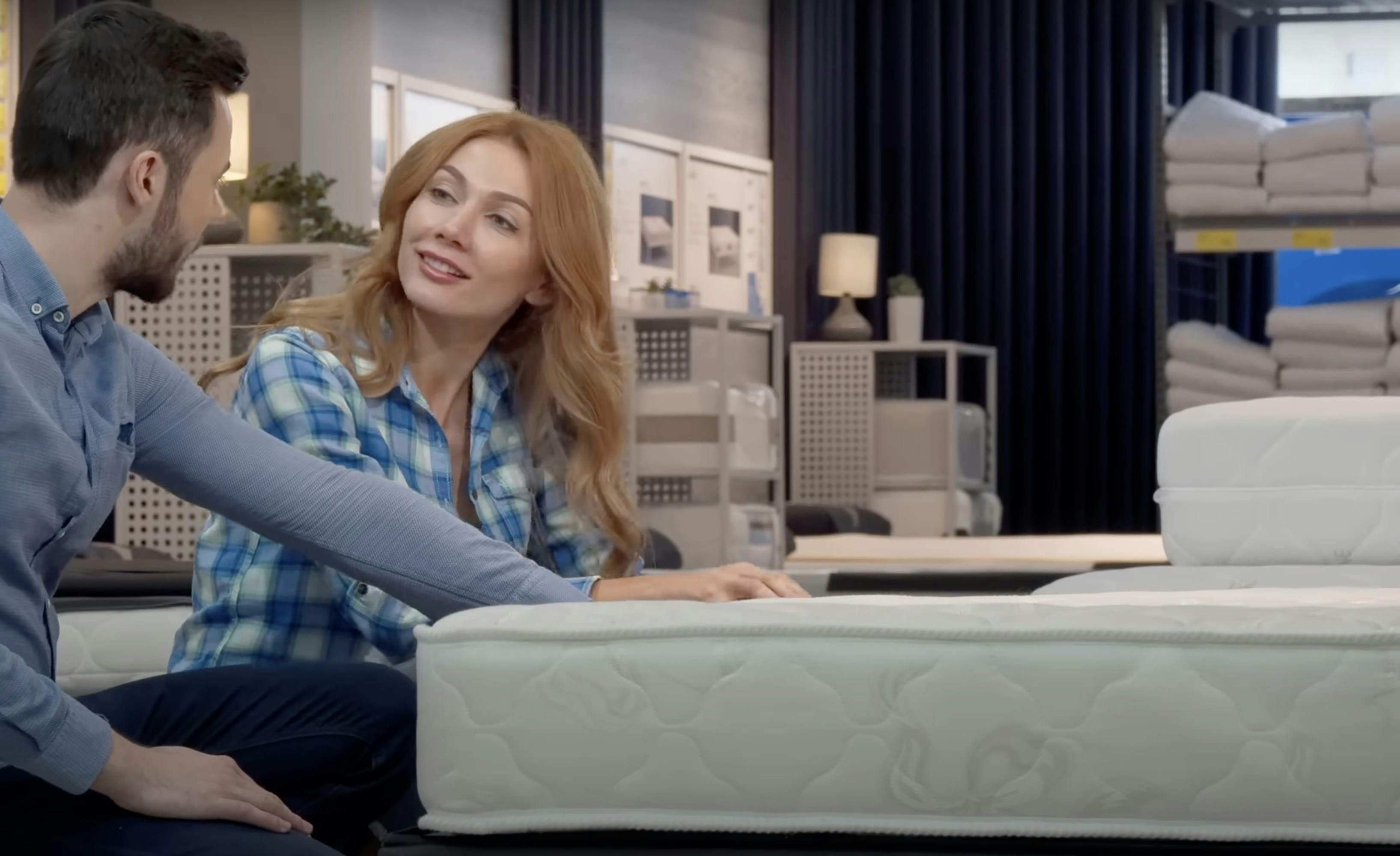
Before comparing mattresses, each partner should describe what comfort and support mean to them. Discuss preferred firmness, from plush to firm, and note whether that preference is consistent or changes with sleep position. Side sleepers often need enough cushioning around the shoulders and hips, while back or stomach sleepers may prefer a surface that keeps the body more level. These are useful starting points, not strict rules: individual comfort matters, and partners may respond differently to the same design.
Body weight can also affect how a mattress feels. The same model may feel softer to someone who sinks farther into its surface and firmer to someone who places less pressure on it. Identify any pressure points, such as sore shoulders, hips, or knees, and consider whether the current mattress contributes to discomfort. Temperature sensitivity is another practical factor. One person may sleep warm and prefer breathable materials, while the other may prioritize a snug, insulating feel. Pain, reduced mobility, or difficulty getting in and out of bed can make responsive support and ease of movement especially important.
Use the current mattress as a source of evidence. Each partner can explain what works well, what feels uncomfortable, and when problems occur—for example, during the night, on waking, or after changing positions. Then separate essential needs from preferences that might be flexible. Relief from a recurring pressure point or adequate support for a painful back may be essential; a particular surface feel or material may be open to compromise. This distinction helps couples compare options more clearly and avoid treating every preference as equally critical. The aim is not to give one sleeper their ideal mattress at the other’s expense. Instead, seek a solution that satisfies both people’s most important comfort and support requirements, whether through a balanced shared feel or a design that accommodates different needs.
Different mattress constructions can help couples balance distinct sleep preferences, but no material guarantees a comfortable night for everyone. Memory foam conforms closely to the body, which can ease pressure around the shoulders and hips and limit the transfer of movement across the bed. This motion isolation may suit partners who wake easily when the other turns. However, some sleepers find close contouring restrictive or warm, so foam density, comfort layers, and cooling features deserve attention alongside the material name.
Latex generally responds more quickly to movement than memory foam, making it easier to change positions or get out of bed. It can offer buoyant support and cushioning without the same enveloping sensation, although the exact feel varies by construction. Hybrid mattresses combine comfort layers, which may use foam or latex, with a coil support core. The coils can provide a more responsive feel and airflow, while the upper layers add cushioning. Coil design and layer thickness influence comfort, support, and how much motion reaches a partner.
Compare firmness, pressure relief, edge support, temperature regulation, and motion isolation as connected features rather than separate promises. Firmness labels such as “medium” are not standardized across brands, and a mattress that feels balanced to one person may feel too soft or firm to another. Body weight, sleep position, and personal sensitivity all affect how a surface feels. Side sleepers often prioritize cushioning at pressure points, while back or stomach sleepers may prefer firmer support, though individual needs differ. Strong edges can make it easier for two people to use the full surface, and breathable materials may help manage heat. Whenever possible, both partners should test the mattress together in their usual positions and review trial and return terms. Judge the complete design and your shared experience, not material names or marketing claims alone.
When partners need noticeably different levels of support, a split arrangement can offer more choice than a single, uniform mattress. A split king typically combines two twin XL mattresses to create the dimensions of a standard king, allowing each person to select a preferred firmness and, in some cases, a different mattress type. This can suit couples whose comfort preferences or sleep positions differ substantially—for example, a side sleeper who prefers cushioning alongside a back sleeper who needs a firmer, more supportive surface. It may also help when one person has health-related comfort needs that call for a particular feel.
Another option is a split-firmness mattress, which has distinct comfort levels on each half while keeping the bed’s surface connected. It can provide individual support without the more obvious separation between two mattresses. Couples should check how pronounced the division feels and whether movement on one side affects the other. With either setup, a seam may be noticeable, especially when the mattresses shift apart. A bridge or suitable bedding may reduce the gap, but sheets, mattress protectors, and comforters must fit the combined dimensions and design. Confirm compatibility before buying, since some standard king bedding may not work as intended with two separate pieces.
An adjustable base adds the ability to raise each partner’s head or feet independently, which may improve comfort for people who prefer different positions or need particular elevation for health-related reasons. Split king bases often allow separate controls, but require a compatible frame and may need two twin XL fitted sheets; the top sheet and other bedding can remain shared if desired. These solutions generally cost more than a conventional mattress and can introduce extra setup, maintenance, and coordination. Consider whether independent positioning will be used regularly, and verify that the mattress is designed to flex with the base. Comparing total costs, return policies, and room dimensions can help couples decide whether personalization justifies the added complexity.
Once you have shortlisted a few mattresses, test each one together rather than relying only on individual impressions. Both partners should lie down in their usual sleeping positions for several minutes, allowing enough time to notice pressure around the shoulders, hips, and lower back. Try changing positions as you normally would at night. A mattress should support each person’s body without requiring either partner to adopt an unfamiliar posture or tolerate discomfort. If one person prefers a softer surface and the other needs firmer support, assess whether the mattress accommodates both needs or whether a split configuration is available.
During the test, check how much movement travels across the bed. One partner can turn over or get up while the other remains still, then switch roles. Notice whether movement is likely to disturb the lighter sleeper. Also test the edges by sitting and lying near them; stable edge support can make it easier to get in and out of bed and use the full sleep surface. Consider the bed’s size, too: adequate space may reduce contact and disruption, particularly when partners move differently during the night.
Before purchasing, review the trial period and read the conditions carefully. Check how long you must keep the mattress before requesting a return or exchange, whether pickup or restocking fees apply, and whether the warranty covers the issues that matter to you. Confirm delivery and setup costs, removal of the old mattress, and any requirements for a compatible bed base. After delivery, allow time for adjustment and follow the seller’s guidance on trial length and care. Keep brief notes from each partner about comfort, sleep quality, awakenings, and any pain or pressure symptoms. Comparing these observations over several weeks provides a more reliable basis for deciding whether the mattress suits both sleepers than judging it after a single night.
Leave a Reply